
A Day at Mount St. Michael
More Than a Schedule. A Rhythm Designed for Children.
A Day at Mount St. Michael
More Than a Schedule.
A Rhythm Designed for Children
A day at Mount St. Michael brings together purposeful work, serious learning, prayer, movement, conversation, friendship, responsibility, laughter, and time outdoors. Each has an important place in the rhythm of a school day designed to form the whole child – mind, heart, body, and soul.
The rhythm changes as children grow. A toddler learning to pour water independently needs something different from an eighth grader learning to evaluate an argument. Yet every stage is directed toward the same purpose: helping each child grow in knowledge, confidence, wisdom, virtue, and faith, with the capability, freedom, and character to live those gifts well.
Schedule Overview by Age Group
One School.
Four Distinct Stages of Growth.
Children do not all learn in the same way or need the same daily experience.
The rhythm of each age group reflects the child’s stage of intellectual, spiritual, social, emotional, and physical development, rather than simply a change in academic content. Increasing maturity brings increasing responsibility, more complex academic work, deeper discussion, and greater independence.
The following provides a picture of a typical day. Exact schedules vary by grade, day, season, and special activity.
Toddler Montessori
18 Months Through Age Three
A Gentle Beginning Built Around Trust and Independence
For a toddler, the school day begins with emotional safety. Guides greet children calmly, address them by name, come down to their eye level, and help each child transition into the classroom community.
The environment is ordered, peaceful, and scaled to the child. Low shelves, child-sized furniture, accessible materials, and familiar routines allow toddlers to make meaningful choices and participate more independently in their day.
A Typical Rhythm
Arrival and welcome
Children enter a calm, prepared environment and receive individual support as they separate from their caregivers and begin the day.
Prayer and faith
Simple prayers, sacred songs, stories, and participation in the Catholic life of the school introduce young children to the language and rhythms of faith.
Montessori work cycle
Children choose purposeful activities suited to their interests and readiness. Guides observe, present materials, encourage concentration, and give children time to repeat and master their work.
Practical life
Activities such as washing, dressing, eating, pouring, cleaning, and caring for the environment help children develop coordination, confidence, order, and independence.
Language and social development
Naming objects, describing actions, listening to stories and music, singing, conversing, and interacting with peers help toddlers develop language and learn how to participate in a community.
Movement indoors and outdoors
Walking, climbing, balancing, running, jumping, carrying, grasping, transferring objects, and using tools to support gross- and fine-motor development.
Meals, rest, and personal care
Meals, toileting, rest, and transitions are treated as meaningful parts of development rather than interruptions to learning.
Closing and dismissal
Children restore materials, complete familiar routines, and prepare to return to their families.
What Is Being Formed?
By participating in this daily rhythm, toddlers begin developing:
- Trust and emotional security
- Independence
- Concentration
- Coordination
- Language
- Order
- Social awareness
- Confidence
- Care for themselves, others, and their environment
Children's House
Preschool Through Kindergarten
Purposeful Work Guided by Readiness
Children’s House brings together children of different ages within a carefully prepared Montessori environment. The mixed-age community allows younger children to observe more advanced work while older children develop confidence, responsibility, and leadership.
Guides watch closely for each child’s developmental readiness and introduce lessons at the time they are most likely to take root. Children are given meaningful freedom within clear boundaries, allowing independence and self-discipline to grow together.
A Typical Rhythm
Arrival and Preparation
Children enter the classroom, organize their belongings, greet their guides and classmates, and prepare to participate in the community.
Prayer and Mass
The Catholic rhythm of the school invites children into prayer, worship, reverence, and an increasingly personal relationship with Jesus Christ. Children’s House students attend Mass twice weekly with their Mass Buddies (6-8th graders) to aid in their participation and model correct behaviors.
Uninterrupted Montessori Work
Children select purposeful work across practical life, sensorial development, language, mathematics, geography, science, and culture. Guides provide individual and small-group lessons while protecting sustained periods of concentration.
Catechesis of the Good Shepherd
Within the Atrium, children encounter Scripture and the liturgy through prayer, song, silence, conversation, and hands-on materials designed for prayerful contemplation.
Language and Mathematics
Children progress according to readiness as they develop phonemic awareness, reading, writing, number sense, and early mathematical operations.
Outdoor Play and Exploration
Time outdoors gives children room to move, observe nature, develop friendships, practice cooperation, and experience the created world directly.
Art, Music, Movement, and Enrichment
Creative and physical activities support expression, coordination, beauty, joy, and the development of the whole child.
Community Responsibilities
Children care for classroom materials, restore and clean their work areas, help others, and learn that belonging to a community includes responsibility for it.
What Is Being Formed?
Children’s House helps students develop:
- Independence joined with responsibility
- Sustained attention
- Early literacy and mathematical understanding
- Fine- and gross-motor coordination
- Careful observation
- Self-discipline
- Respect for others
- Confidence as learners
- Wonder and love for God
Classical Grammar School
Grades One Through Four
Building the Knowledge Children Will Learn to Use
The grammar years take advantage of a period when children readily absorb language, facts, stories, patterns, rules, and categories.
Students build a broad foundation across literature, history, religion, mathematics, science, language arts, Latin, and the arts. Memory, recitation, repetition, song, story, observation, and hands-on experience help essential knowledge become familiar and lasting.
This is not memorization for its own sake. Students are acquiring the vocabulary and information they will later learn to analyze, connect, question, and apply.
A Typical Rhythm
Arrival and Classroom Preparation
Students begin by organizing themselves and their materials, greeting their teachers and classmates, and preparing the responsibilities of the day.
Daily Mass and Prayer
The community gathers around Christ, placing worship at the center of the school day. Prayer continues throughout the day, including the schoolwide Angelus at noon and prayer at dismissal.
Language Arts and Literature
Reading, writing, spelling, grammar, narration, and engagement with worthwhile literature help students develop command of language and a love for stories and ideas.
Mathematics
Students build fluency, accuracy, number sense, and the habits needed to solve increasingly complex problems, using manipulatives and games to solidify understanding.
History, Science, and Geography
Students encounter people, places, events, patterns, and the natural world within a program designed to help build connections across subjects and develop an integrated understanding of the world.
Religion and Catechesis of the Good SheperdStudents grow in their understanding of Scripture, the liturgy, Catholic teaching, salvation history, prayer, and their place within God’s work.
Latin
The study of Latin develops vocabulary, grammatical awareness, careful attention, memory, and an understanding of the roots shared by language, science, law, and the Church’s intellectual tradition.
Outdoor Learning and Agricultural Studies
The campus, farm, apiary, and natural environment provide real-world opportunities for observation, responsibility, stewardship, and wonder.
Art, Music, Physical Education, and Play
Children need to create, sing, move, compete, cooperate, laugh, and spend time with friends. These experiences are part of their education, not rewards for completing it.
What Is Being Formed?
During the grammar years, students develop:
- A strong foundation of knowledge
- Fluency in reading, writing, and mathematics
- Memory and attention
- Intellectual curiosity
- Responsibility for work and materials
- Habits of prayer
- Respectful relationships
- Perseverance
- Delight in learning
- An expanding sense of truth, beauty and goodness.
Classical Dialectic / Logic School
Grades Five Through Eight
Learning to Connect, Question, Reason, and Articulate
As students mature, they naturally become more interested in relationships, causes, contradictions, and the reasons behind what they are learning.
The dialectic or logic years build upon the knowledge acquired earlier. Students learn to examine information, recognize connections, test ideas, evaluate arguments, ask better questions, and explain their conclusions with increasing precision.
Teachers continue to provide structure and guidance while expecting students to accept greater responsibility for their preparation, conduct, decisions, relationships, and contribution to the life of the community.
A Typical Rhythm
Arrival and Preparation
Students begin the day by organizing their work, reviewing responsibilities, and preparing to participate actively in class.
Daily Mass and Prayer
Worship, Scripture, the Angelus, the Sacraments, and shared prayer keep intellectual growth connected to wisdom, humility, and faithful living.
Literature, Writing, and Language
Students read increasingly complex texts, examine the choices and ideas within them, support interpretations with evidence, and learn to write and speak with clarity.
History and Culture
Students study events and civilizations in context, considering causes, consequences, human motivations, moral choices, and relationships across time and place.
Mathematics and Science
Students move beyond procedures toward deeper understanding, logical reasoning, disciplined investigation, and the ability to explain how conclusions are reached.
Latin and Language Study
Latin strengthens precision, vocabulary, grammatical understanding, logical habits, and access to the linguistic and intellectual inheritance of Western civilization and the Church.
Religion and Personal Formation
Students examine Catholic teaching with greater depth and are challenged to connect belief with decisions, relationships, responsibility, human dignity, and service.
Discussion and Reasoned Expression
Students learn how to listen carefully, disagree respectfully, ask useful questions, distinguish strong reasoning from weak reasoning, and articulate what they believe.
Arts, Athletics, Outdoor Learning, and Service
Creative expression, physical challenge, agricultural studies, time outdoors, service, and community responsibilities keep intellectual growth connected to the body, relationships, the natural world, and the needs of others.
What Is Being Formed?
During the dialectic/logic years, students develop:
- Clear and disciplined reasoning
- The ability to connect knowledge across subjects
- Thoughtful written and spoken expression
- Intellectual humility
- Moral discernment
- Greater personal responsibility
- Courage and integrity
- Leadership through service
- Preparation for high school
- Confidence grounded in faith and character
A CHILDHOOD WORTH PROTECTING
Children Should Not Have to Become Adults Before Their Time
Childhood is not a holding period before real life begins. It is a significant season in which identity, imagination, habits, relationships, faith, and character take root.
Children need to encounter challenging ideas and meaningful expectations. They also need time to move, explore, create, laugh, wonder, build friendships, experience nature, and enjoy being children.
Mount St. Michael does not believe those needs are in conflict.
Academic rigor does not require a hurried childhood. Structure does not require an impersonal environment. does not need to dominate learning. Preparation for the future does not require children to carry every pressure of the adult world into the classroom.
A childhood worth protecting is not a childhood protected from every challenge. It is one protected for the right challenges—the kind that develop ability, courage, responsibility, wisdom, faith, and confidence.
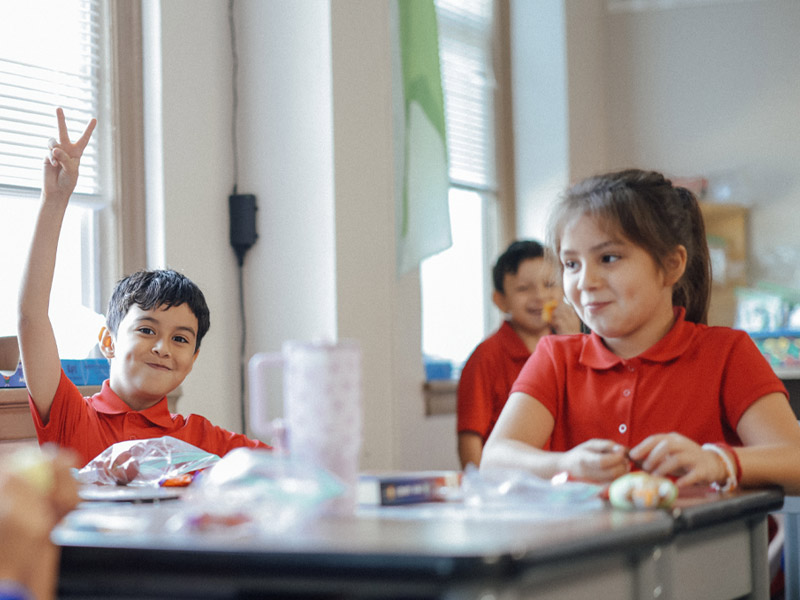
Known.
Every child arrives with individual gifts, needs, interests, strengths, struggles, and possibilities.
To educate a child well, a teacher must know more than the child’s name and academic level. Teachers must pay attention to how the child learns, what captures the child’s curiosity, where encouragement is needed, when greater challenge is appropriate, and what may be preventing growth.
Smaller learning communities and sustained relationships allow teachers to recognize the whole person behind the performance.
Being known means a child is not anonymous.
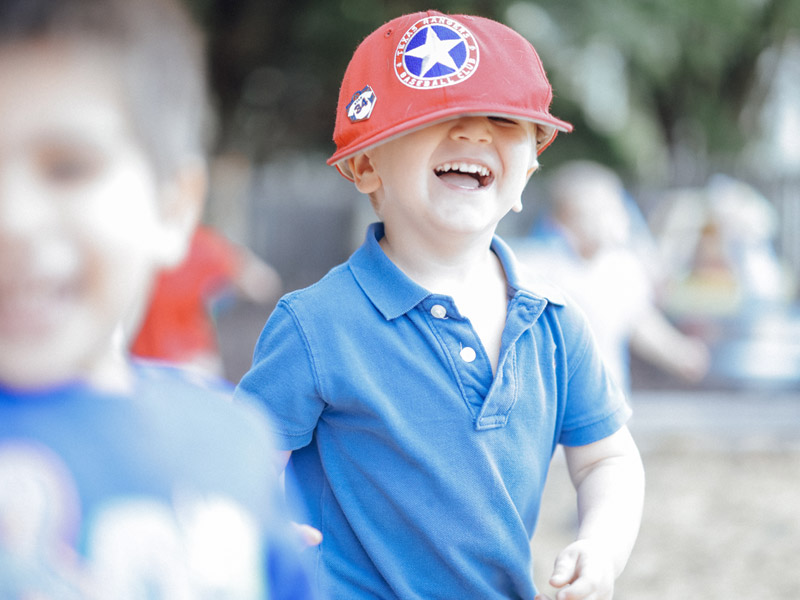
Loved.
To be loved at school does not mean being praised constantly, protected from consequences, or excused from meaningful expectations.
It means being treated as a person of inherent dignity.
Students experience love through patience, truthfulness, consistency, forgiveness, encouragement, appropriate correction, and the daily assurance that adults seek what is genuinely good for them.
Love creates the trust children need to attempt difficult work, acknowledge mistakes, receive guidance, and begin again.
Being loved means a child’s worth is never reduced to a grade, behavior, ability, or achievement.
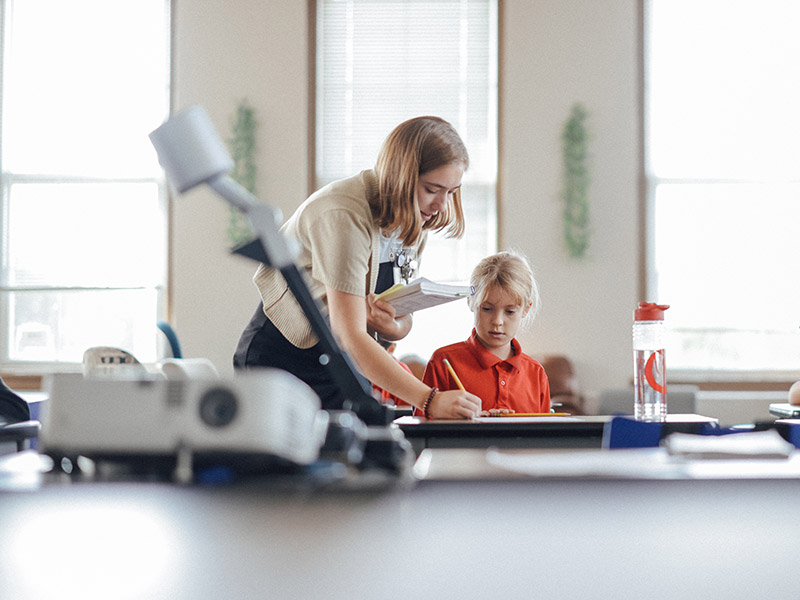
Challenged.
Children flourish when adults believe they are capable of growth.
At MSMCS, challenges mean more than giving students additional work. It means inviting them to think more deeply, persevere longer, act more responsibly, communicate more clearly, repair what they have harmed, use their gifts generously, and attempt what they could not yet do alone.
The right challenge respects a child’s stage of development while refusing to underestimate the person that child can become.
Being challenged means a child is not left where he or she began.
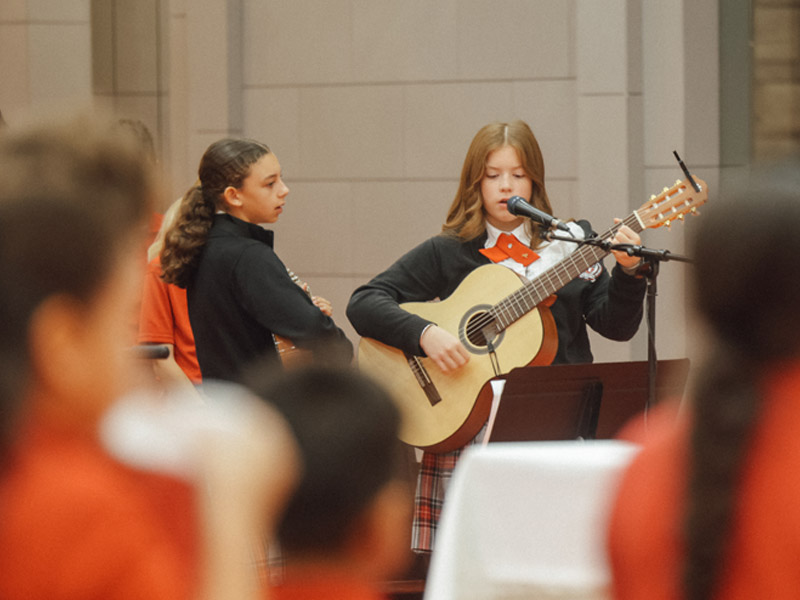
Formation Without Losing Wonder.
The goal is not to choose between academic preparation and a joyful childhood.
Students can memorize and imagine. They can reason and wonder. They can work hard and laugh. They can accept discipline and experience grace. They can prepare seriously for high school while still spending time outdoors, caring for animals, creating art, making music, competing in athletics, serving others, and enjoying genuine friendships.
Rigor and wonder belong together because education is not merely about producing results.
It is about forming human beings.
Plan Your Visit
The Best Way to Understand a Day at MSMCS Is to Experience One
A schedule can show where students go. It cannot fully communicate the atmosphere of a classroom, the relationship between a teacher and child, the joy of the playground, the stillness of prayer, or the sense of belonging that develops within a community.
Come walk the campus, observe the classrooms, and imagine your child within the life of Mount St. Michael.