From Wonder to Wisdom
The Learning Path at Mount St. Michael
From Wonder to Wisdom
The Learning Path at Mount St. Michael
Children do not all think, learn, or mature in the same way at every age.
A toddler learns through movement, imitation, language, and purposeful activity. A young child is ready to develop concentration, independence, order, and foundational skills. An elementary student readily gathers knowledge, stories, language, patterns, and facts. An older student begins asking why, testing ideas, identifying relationships, and forming independent judgments.
The learning path at Mount St. Michael respects those natural stages.
Beginning with Montessori foundations and progressing through the grammar and dialectic stages of classical education, students grow from direct experience toward knowledge, understanding, clear reasoning, moral discernment, and confident expression.
Throughout every stage, Jesus Christ remains at the center.
OVERVIEW OF THE LEARNING PATH
A Coherent Progression from Early Childhood Through Eighth Grade
The educational stages at MSMCS are distinct, but they are not disconnected.
The independence cultivated in Montessori prepares children to accept responsibility in the classical classroom. The language and knowledge acquired during the grammar years give older students the material they need to reason, evaluate, connect, and communicate during the dialectic years.
Each stage prepares for the next without rushing the child beyond the developmental work of the present.
FROM WONDER TO WISDOM
Four developmental stages.
One enduring purpose.

Toddler Montessori
18 months–3 years
Natural Development
Move, imitate, explore, name, and develop trust
Educational Focus
Practical life, language, movement, sensory exploration, coordination, order, and independence
What is Being Formed
Confidence, security, concentration, physical development, and the first habits of community
Children’s House
Preschool–Kindergarten
Natural Development
Choose purposeful work, repeat, classify, concentrate, and seek independence
Educational Focus
Montessori language, mathematics, sensorial work, practical life, geography, science, culture, and Catechesis of the Good Shepherd
What is Being Formed
Foundational literacy and numeracy, self-discipline, curiosity, independence, responsibility, and wonder
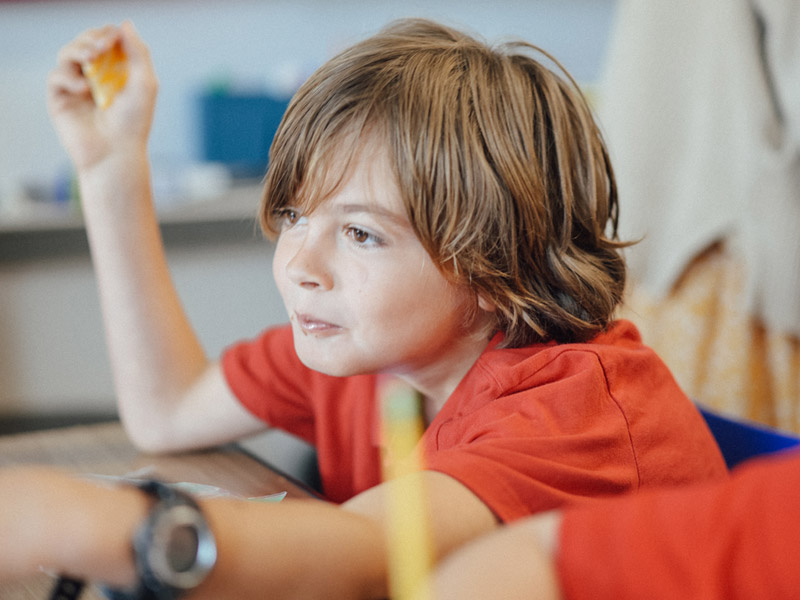
Classical Grammar School
Grades 1–4
Natural Development
Absorb language, stories, facts, patterns, rules, and categories
Educational Focus
Reading, writing, grammar, literature, mathematics, history, science, religion, geography, Latin, art, music, outdoor learning, and Catechesis of the Good Sheperd.
What is Being Formed
A broad foundation of knowledge, strong academic habits, memory, attention, intellectual curiosity, and delight in learning
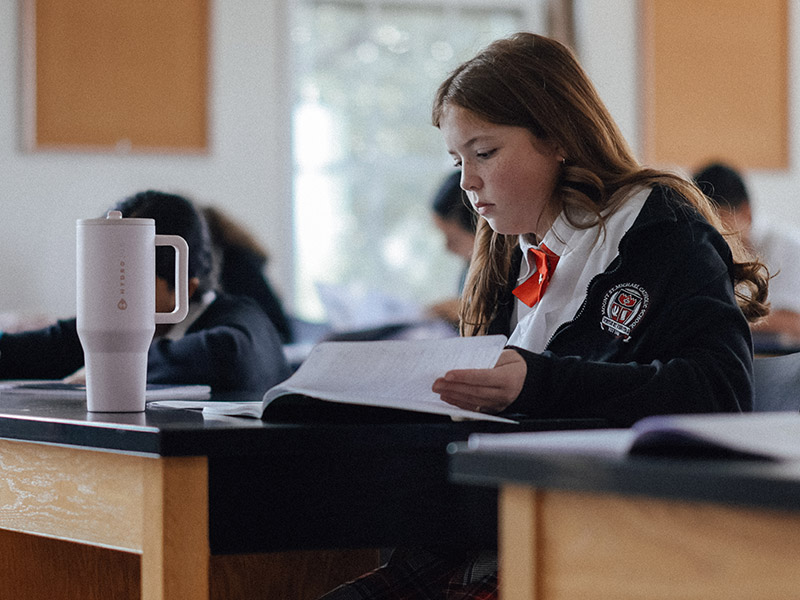
Classical Dialectic/Logic School
Grades 5–8
Natural Development
Question, compare, connect, test, analyze, and seek reasons
Educational Focus
Logical reasoning, discussion, argument, advanced writing, literature, history, mathematics, science, Latin, theology, service, arts, and athletics
What is Being Formed
Clear thought, moral discernment, articulate expression, intellectual humility, leadership, responsibility, and preparation for high school
Toddler Montessori Approximately
18 months–3 years
Natural Development
Move, imitate, explore, name, and develop trust
Educational Focus
Practical life, language, movement, sensory exploration, coordination, order, and independence
What is Being Formed
Confidence, security, concentration, physical development, and the first habits of community

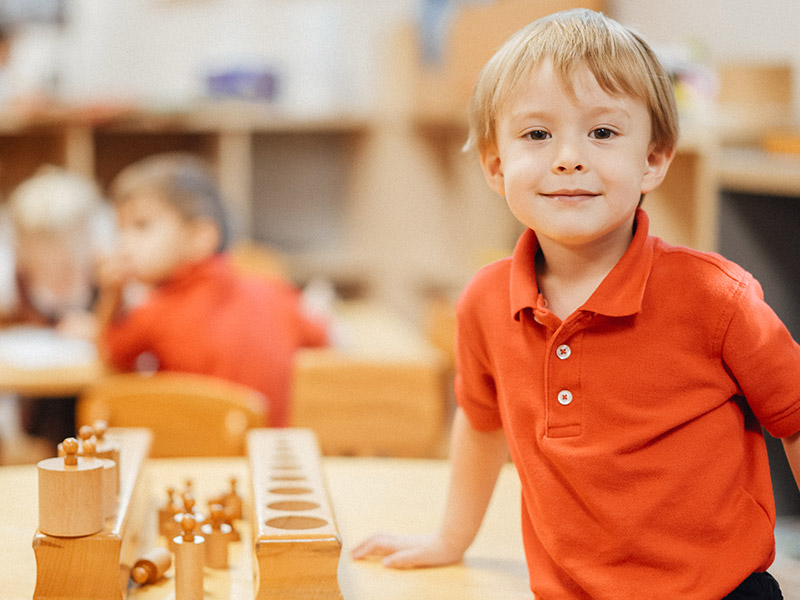
Children’s House
Preschool–Kindergarten
Natural Development
Choose purposeful work, repeat, classify, concentrate, and seek independence
Educational Focus
Montessori language, mathematics, sensorial work, practical life, geography, science, culture, and Catechesis of the Good Shepherd
What is Being Formed
Foundational literacy and numeracy, self-discipline, curiosity, independence, responsibility, and wonder

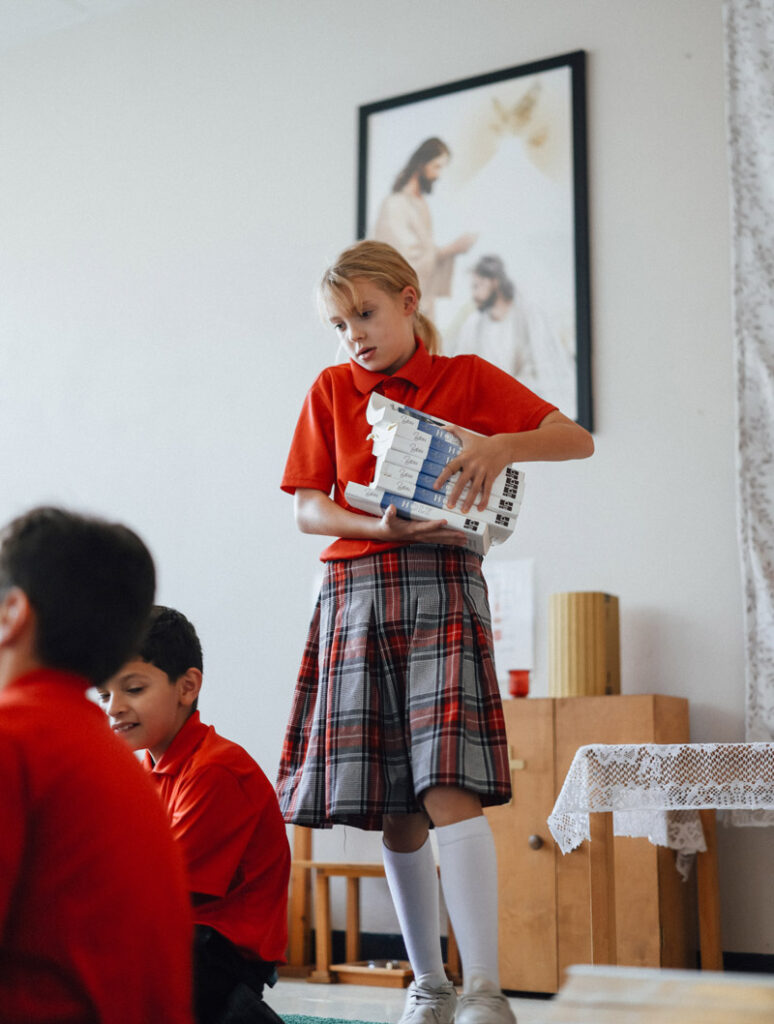
Classical Grammar School
Grades 1–4
Natural Development
Absorb language, stories, facts, patterns, rules, and categories
Educational Focus
Reading, writing, grammar, literature, mathematics, history, science, religion, geography, Latin, art, music, outdoor learning, and Catechesis of the Good Sheperd.
What is Being Formed
A broad foundation of knowledge, strong academic habits, memory, attention, intellectual curiosity, and delight in learning

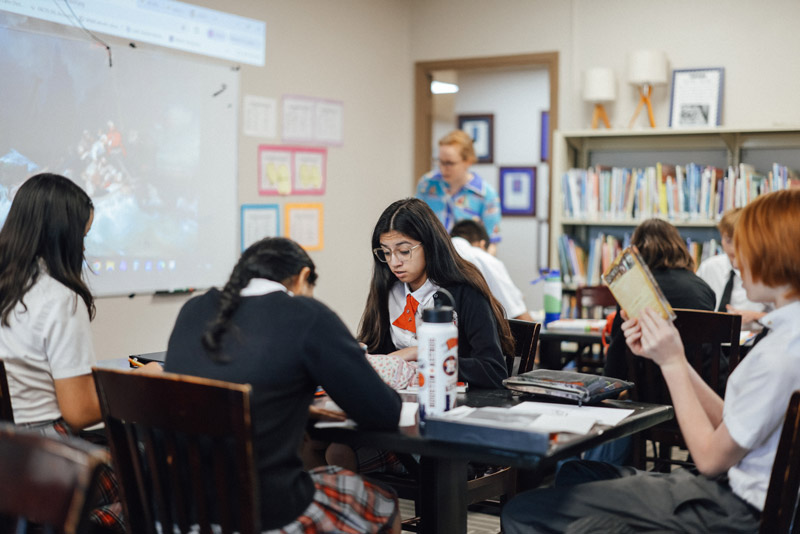
Classical Dialectic/Logic School
Grades 5–8
Natural Development
Question, compare, connect, test, analyze, and seek reasons
Educational Focus
Logical reasoning, discussion, argument, advanced writing, literature, history, mathematics, science, Latin, theology, service, arts, and athletics.
What is Being Formed
Clear thought, moral discernment, articulate expression, intellectual humility, leadership, responsibility, and preparation for high school
Jesus Christ at the Center • Parents as Primary Educators • Truth, Goodness & Beauty • Known, Loved & Challenged • Academic Excellence with Purpose
Final Outcome
Prepared Not Only for What Comes Next, but for Who They Are Becoming
MSMCS graduates should enter high school able to:
- Read with understanding
- Write and speak with clarity
- Think logically
- Connect knowledge across subjects
- Evaluate new information
- Ask meaningful questions
- Defend a conclusion with evidence
- Recognize truth and choose what is good
- Accept responsibility
- Serve others generously
- Continue learning independently
- Live with confidence grounded in faith and character
EDUCATIONAL PHILOSOPHY & APPROACH
Education Should Follow the Development of the Child
Children are not smaller versions of adults, and education should not treat every age as if it learns in the same way.
At MSMCS, educational methods change as the child develops. Young children need purposeful movement, sensory experience, repetition, language, order, and meaningful independence. Elementary students are eager to collect knowledge and become fluent with the tools of learning. Older students are increasingly ready to question, analyze, connect, debate, and form judgments.
The school’s progression from Montessori to classical education is therefore intentional.
Montessori education establishes the habits and foundations upon which classical learning can be built. Classical education then develops those foundations toward deeper knowledge, independent reasoning, moral discernment, and articulate expression.
Montessori and Classical Education Belong Together
At first glance, Montessori and classical education may appear to be separate approaches.
Montessori emphasizes the prepared environment, developmental readiness, purposeful choice, hands-on materials, observation, independence, and concentration. Classical education emphasizes language, knowledge, memory, logic, intellectual connection, reasoned discussion, and the pursuit of truth, goodness, and beauty.
At MSMCS, the two approaches meet their understanding of the child as a person capable of wonder, disciplined attention, meaningful work, intellectual growth, and increasing freedom.
Montessori helps young children develop the ability to choose and complete purposeful work. Classical education gives them an increasingly rich body of knowledge and teaches them how to understand, connect, evaluate, and use it.
The transition is not from freedom to rigidity. It is from one form of purposeful learning to the next.
Becoming Before Achieving
Academic achievement matters. Students need strong skills, broad knowledge, disciplined habits, and preparation for the demands of high school.
But achievement alone is not the purpose of education.
Every educational experience contributes to the person a child is becoming. A student may earn high marks and still need to grow in courage, humility, integrity, judgment, responsibility, or service. A complete education must attend to both ability and character.
That is why one question guides the MSMCS educational approach:
Who is this child becoming?
The answer is shaped through lessons, expectations, relationships, prayer, responsibility, discipline, friendship, service, failure, forgiveness, and teaching a child to recognize what is true, good, and beautiful.
Education is about becoming before achieving because the person determines how achievement will ultimately be used.
Knowledge Before Analysis
Children cannot think critically about information they do not possess.
The grammar stage therefore gives students a rich foundation of language, stories, history, mathematics, science, religion, geography, literature, music, art, and culture. Students collect, memorize, organize, classify, narrate, and practice until essential knowledge becomes familiar.
As students mature, the dialectic or logic stage teaches them to work with that knowledge. They begin identifying causes and consequences, recognizing relationships, testing assumptions, evaluating arguments, comparing perspectives, and supporting conclusions.
MSMCS does not choose between knowledge and critical thinking. Knowledge gives critical thinking something meaningful to examine.
A Language-Centered Education
Language is the principal means through which students receive, organize, test, and communicate ideas.
Reading introduces students to experiences, arguments, stories, and wisdom beyond their immediate lives. Writing forces thought to become clearer. Grammar gives language order. Discussion teaches students to listen, respond, question, and explain. Latin strengthens vocabulary, precision, grammatical awareness, and understanding of linguistic roots.
A language-centered education helps students become more than fluent readers and capable writers. It prepares them to recognize the power of words and use language truthfully, responsibly, and persuasively.
Learning to Make Connections
Knowledge is not naturally divided into isolated school subjects.
Historical events shape literature. Scientific discoveries affect culture. Mathematics reveals order. Art reflects belief. Geography influences civilization. Language carries history. Faith gives the pursuit of truth its ultimate direction.
Classical education helps students recognize those relationships.
Rather than treating every subject as an unrelated requirement, teachers help students build a coherent understanding of the world. New knowledge becomes more useful because students can connect it with what they already know.
The goal is not simply retention. It is integration, context, understanding, and wisdom.
Teaching Students How to Learn
The ultimate goal of education is not permanent dependence upon a teacher.
Students should gradually develop the habits and abilities needed to learn for themselves: attention, curiosity, memory, organization, perseverance, observation, questioning, research, analysis, reflection, discussion, and clear expression.
Teachers provide more structure when children need it and expect greater independence as students mature.
By eighth grade, students should be increasingly capable of approaching unfamiliar information, identifying what they need to understand, asking useful questions, evaluating evidence, making connections, and communicating what they have learned.
This is preparation not only for high school, but for a lifetime of learning.
Rigor and Wonder
Rigor does not require a joyless education.
Students can work hard and remain curious. They can memorize and imagine. They can reason carefully and retain a sense of wonder. They can accept correction and experience encouragement. They can pursue excellence while laughing, creating, moving, serving, and enjoying friendship.
Wonder gives children a reason to seek understanding. Rigor gives them the habits necessary to pursue it well.
At MSMCS, the two belong together.
Known, Loved, and Challenged
A strong curriculum alone cannot educate an individual child.
Teachers must know how a student learns, where that student is thriving, what may be preventing growth, and when additional support or greater challenge is needed.
Being known means the child is not anonymous.
Being loved means the child is treated with inherent dignity, truthful encouragement, patience, forgiveness, and appropriate correction.
Being challenged means the child is not underestimated or left where he or she began.
The goal is not to make learning easy. It is to provide the right challenge within a relationship of trust.
FAITH FORMATION
Faith Gives Learning Its Purpose
Jesus Christ is not added to the MSMCS educational model as a separate component. He is its foundation and destination.
Every child is understood as a person created in the image and likeness of God. Every subject is approached as an opportunity to pursue truth. Every gift carries a responsibility. Every relationship becomes a place to practice virtue. Every achievement finds its proper purpose in loving God and serving others.
Faith formation therefore progresses alongside intellectual formation at every stage.
Faith Through the Four Stages
Toddler Montessori
Young children begin through simple prayer, sacred song, reverent example, language, relationships, and an environment in which they experience trust, peace, order, and love.
Children’s House
Catechesis of the Good Shepherd invites children to encounter Scripture and the liturgy through prayer, silence, song, contemplation, and developmentally appropriate materials.
Classical Grammar School
Students expand their knowledge of Scripture, Catholic teaching, salvation history, the sacraments, prayer, the liturgical year, and the lives of the saints. They begin connecting what the Church teaches with how they live.
Classical Dialectic/Logic School
Older students are ready to examine moral questions, human dignity, responsibility, vocation, relationships, service, and the implications of Catholic belief with greater depth. They are challenged not merely to repeat what they have learned, but to reason from truth and make principled choices.
A Faith That Is Lived
Faith formation occurs through:
- Daily Mass
- Prayer and the Angelus
- Scripture
- Catechesis and religion study
- Adoration
- Confession and sacramental preparation
- Service and works of mercy
- Virtue-based formation
- Relationships with teachers and classmates
- The study of truth, goodness, and beauty
- Encounters with nature and God’s creation
- Partnership between school, home, and parish
The deepest hope is not simply that students know Catholic teaching.
It is that they come to know Jesus Christ personally, love Him, trust Him, and allow that relationship to shape how they reason, choose, serve, and live.
THE GRADUATE
Ready for High School. Formed for Life.
An MSMCS graduate should be recognized not only by academic preparation, but also by character.
The graduate we seek to form:
- Knows Jesus Christ and seeks to follow Him
- Thinks clearly and pursues wisdom
- Reads with understanding
- Writes and speaks with clarity
- Connects knowledge across disciplines
- Evaluates information thoughtfully
- Acts with integrity
- Demonstrates courage and humility
- Accepts responsibility
- Loves learning
- Serves generously
- Treats every person with dignity
- Leads through example
- Enters high school prepared academically and personally
- Lives with purpose and hope
These qualities represent the destination toward which every stage of the learning path is directed.
Explore MSMCS
Discover Where Your Child Is Ready to Begin
Every child enters the learning path with individual gifts, needs, experiences, and possibilities.
Explore the program that corresponds with your child’s current stage or visit Mount St. Michael to see how the full educational progression comes together.