Student Support
Support Begins with Knowing the Child
Student Support
Support Begins with Knowing the Child
Children do not arrive in a classroom with identical gifts, needs, experiences, interests, or ways of learning.
Some grasp a concept quickly and need a greater challenge. Some need additional explanation, practice, time, structure, or encouragement. Others may require specific accommodations or support developed in partnership with their families and outside professionals.
At Mount St. Michael Catholic School, student support begins with relationship. Teachers seek to know the child, understand what may be helping or preventing progress, and communicate honestly with parents. Every child’s personal, academic, and social needs are determined individually.
APPROACH TO LEARNING
Every Child Is a Person, Not a Category
Each student is created in the image and likeness of God, possesses inherent dignity, and brings a distinct combination of gifts and needs to the learning community.
Therefore, we believe that a diagnosis, test score, grade, behavior, strength, or difficulty may reveal a new attribute or something important about a child. However, not any one test or assessment defines the whole child.
The purpose of student support is to understand what a child needs to access learning, make meaningful progress, develop independence, and accept appropriate challenges. The goal is to challenge the child to grow while managing our expectations to the child’s capabilities and not to remove every difficulty.
The guiding question remains:
Who is this child becoming, and what will help that child grow?
Known, Loved, and Challenged
Known
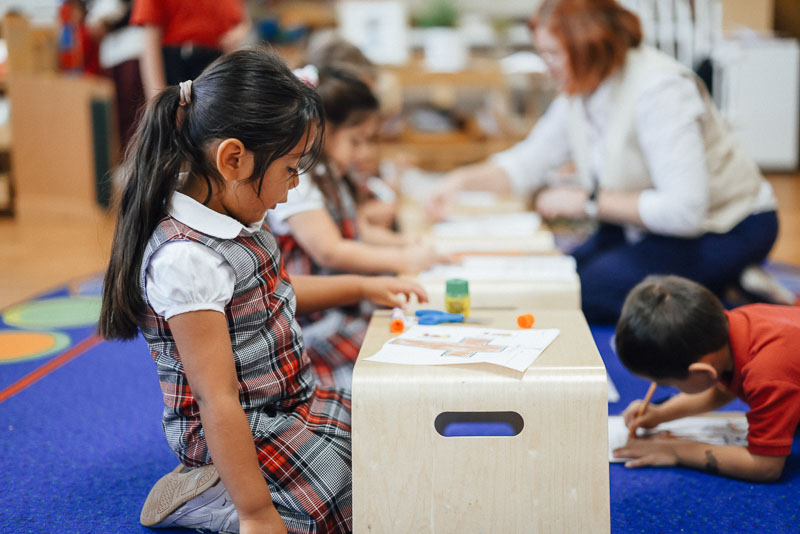
Teachers pay attention to how students approach work, respond to instruction, participate in discussion, interact with classmates, manage responsibilities, and demonstrate understanding.
Knowing a child requires more than reviewing grades. It requires observation, conversation, communication with parents, and attention to patterns over time.
Loved
Support begins with the conviction that a child’s worth does not rise or fall with academic performance.
Students should experience patience, truthfulness, consistency, encouragement, appropriate correction, and respect. Love does not deny difficulty or avoid a necessary conversation. It creates the trust required to face difficulty honestly.
Challenged
Students should not be underestimated because they need support.
The right challenge stretches a child without making success inaccessible. It asks the student to participate actively, practice consistently, accept responsibility, use available support, and continue developing greater independence.
Support should help children grow—not teach them that they are incapable of growth.
Developmentally Responsive Instruction
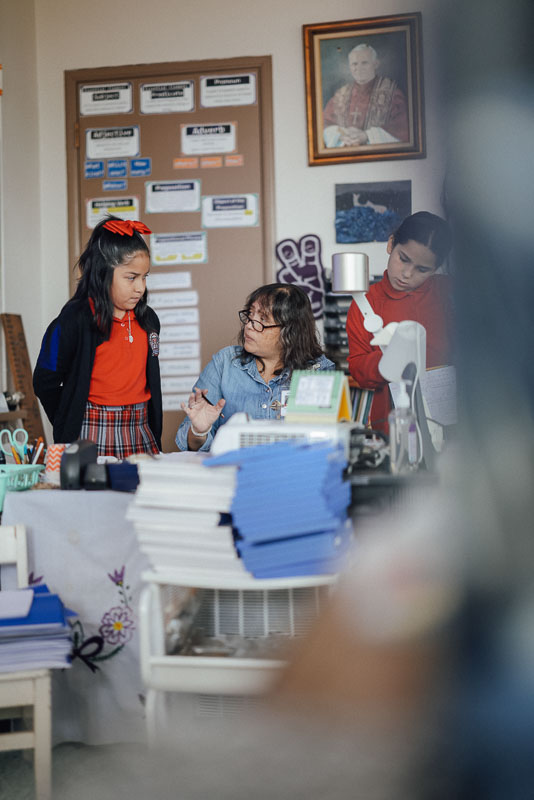
The approach to support changes with the child’s developmental stage.
Montessori
In Montessori environments, guides observe readiness, present carefully sequenced materials, allow meaningful repetition, and use concrete experiences to prepare children for increasing abstraction.
The prepared environment gives children multiple ways to practice concentration, language, movement, coordination, order, practical ability, and foundational academic skills.
Classical Grammar School
Grammar-stage students benefit from clear instruction, meaningful repetition, memory, narration, guided practice, strong routines, concrete examples, and frequent opportunities to demonstrate foundational knowledge.
Classical Dialectic/Logic School
Older students receive increasing support in organization, analysis, discussion, writing, study habits, time management, self-advocacy, and the transition toward more independent academic work.
At every stage, support should respond to the child’s actual needs while preserving the substance and purpose of the curriculum.
Our Process
Support as a Collaborative Process
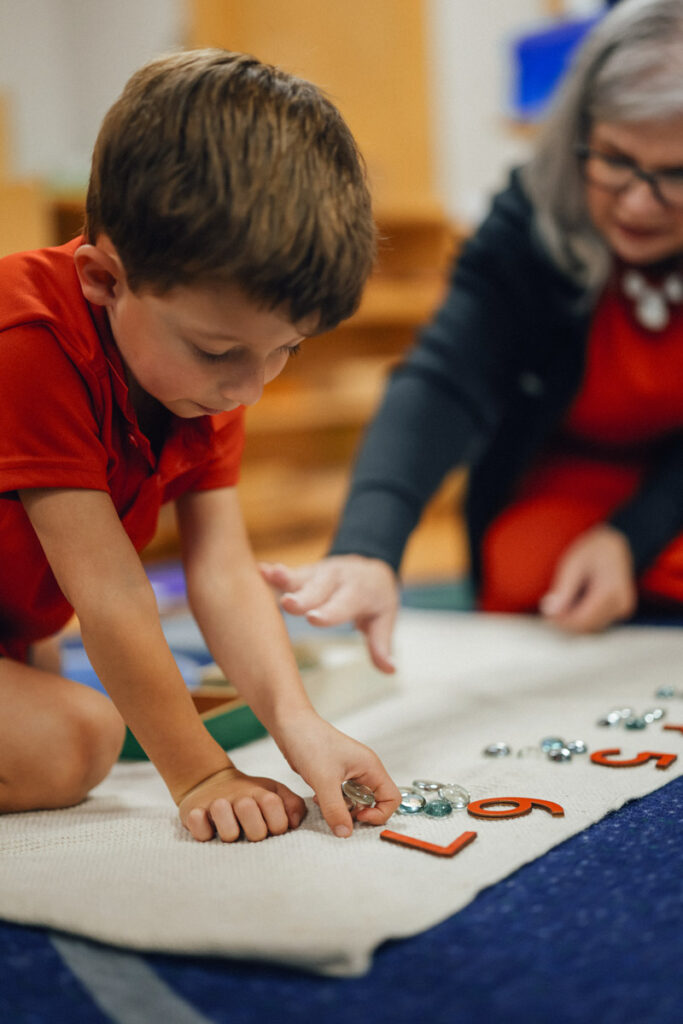
Effective student support requires cooperation among the student, family, teachers, school leaders, and—when appropriate—qualified outside professionals.
A responsible process should include:
Observe
Identify the specific concern, strength, pattern, or barrier rather than relying on a general impression.
Communicate
Bring teachers and parents together to compare observations and understand what is happening across school and home.
Gather Information
Review student work, assessments, prior records, relevant evaluations, and professional recommendations.
Identify Appropriate Support
Determine which strategies, accommodations, interventions, or extensions are reasonable and available within the school’s program.
Define Responsibilities
Clarify what the student, teacher, family, school, and outside professionals will each do.
Monitor Progress
Look for evidence that the support is improving access, understanding, performance, confidence, or independence.
Adjust Honestly
Continue, modify, or reconsider the plan based on actual results and the school’s capacity.
The process should remain practical, documented, and centered on the child rather than becoming a collection of meetings without measurable follow-through.
LEARNING ACCOMMODATIONS, SUPPORT & TEACHER ACCESSIBILITY
Clear Expectations. Honest Partnership.
Families should receive a clear explanation of the support MSMCS can provide, the support it cannot provide, and how decisions are made.
During admissions and throughout enrollment, parents should share relevant information about their child, including prior school records, evaluations, diagnoses, accommodations, therapies, behavioral plans, medical considerations, and professional recommendations.
This information is valuable because it helps the school determine whether it has the program, staffing, expertise, and resources necessary to serve the student responsibly.
Honesty protects the child, the family, the teacher, and the learning community.
What Are Accommodations?
An accommodation changes how a student accesses instruction or demonstrates learning without necessarily changing the essential academic expectation.
Depending upon the student’s documented needs and the school’s resources, examples might include:
- Preferential seating
- Extended time
- Reduced distraction
- Directions provided in multiple forms
- Work divided into smaller steps
- Organizational supports
- Appropriate movement breaks
- Use of approved tools or materials
- Alternative ways to demonstrate understanding
- Adjusted presentation or response format
- Teacher check-ins
- Copies of notes or structured outlines
This list represents several common examples, not a promise that every accommodation is available or appropriate at MSMCS.
Each request should be evaluated individually based on the student’s needs, the essential requirements of the program, professional documentation, classroom conditions, and the school’s capacity.
Accommodations Are Not the Same as Modifications
Accommodations change access. A modification changes what a student is expected to learn or the academic standard against which the student is evaluated.
That distinction matters. Some accommodations may be possible within the MSMCS curriculum, while modifications that fundamentally alter the program or exceed the school’s available resources are not available.
Based on the student’s needs, the admissions committee will determine whether a plan can be put into place to best accommodate the student.

The Role of Outside Professionals
In some cases, a family may work with an educational diagnostician, psychologist, physician, speech-language pathologist, occupational therapist, counselor, tutor, or other qualified professional.
Outside evaluations and recommendations can help the school understand the child more fully. They do not automatically obligate the school to implement every recommendation.
The school and family must determine together which recommendations are educationally appropriate, operationally possible, and consistent with the essential nature of the MSMCS program.

Teacher Accessibility
Parents should know whom to contact, how to raise a concern, and what happens next.
Teachers and parents are partners, and accessibility should be structured in a way that allows teachers to remain fully present to students during the school day.
A clear communication model should include:
- The preferred channel for routine questions
- A reasonable response-time expectation
- A process for requesting a meeting
- Scheduled conferences
- A method for urgent concerns
- Clear escalation from teacher to administrator
- Documentation when a concern requires ongoing action
- Follow-up after a support plan is established
Parents should not have to wonder whether a concern was received. Teachers should not be expected to manage complex educational issues through fragmented texts, hallway conversations, or messages during instructional time.
Accessibility is strongest when it is direct, respectful, organized, and focused on the child.
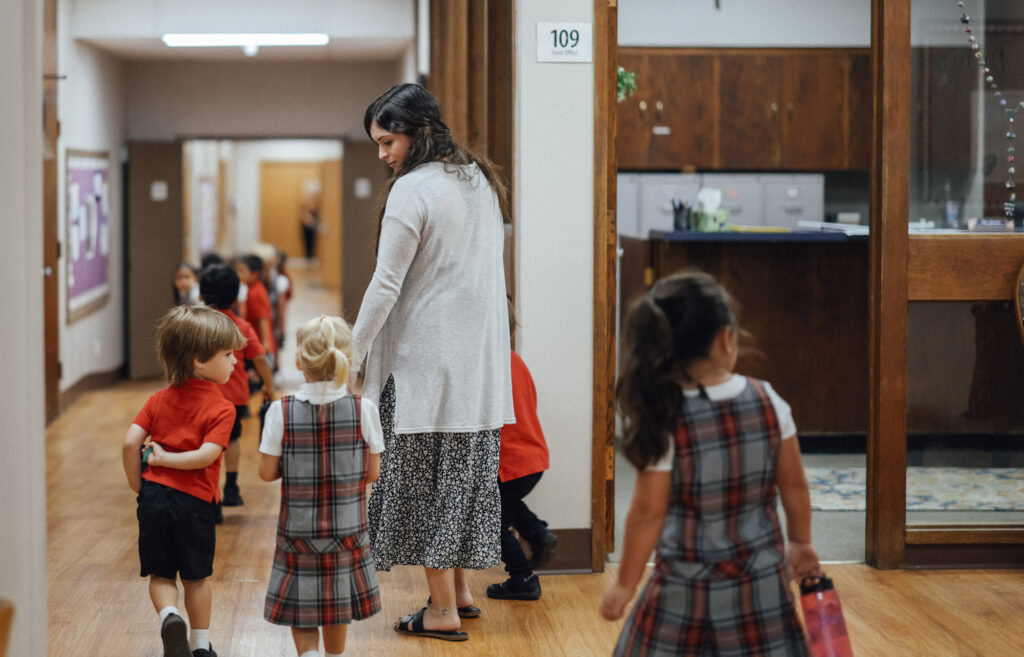
What Parents Can Expect
Within the policies and resources of the school, families should be able to expect:
- Respectful consideration of their concerns
- Honest communication about the child’s progress
- Early discussion when a meaningful concern emerges
- Attention to both strengths and difficulties
- Review of relevant documentation
- Clear explanation of available support
- Defined responsibilities
- Periodic progress monitoring
- Email responses within 24 hours
- Quarterly newsletters covering lessons & classroom activities
- Communication when a plan is not producing the intended result
- Honesty when the school may no longer be the appropriate setting
Trust does not require the school and family to agree immediately about every issue. It requires both to communicate truthfully and remain focused on what will best serve the child.

Questions Families Should Ask
Parents considering MSMCS should feel comfortable asking:
- What learning needs can the school support effectively?
- Who coordinates student-support plans?
- What documentation is required?
- Which accommodations are commonly available?
- Does the school provide intervention during the school day?
- Are specialists employed by the school?
- May outside providers work with students on campus?
- How is progress measured and communicated?
- How are advanced learners challenged?
- What happens if a child’s needs change?
- How does the school determine whether it remains the right placement?
- How will accommodations affect high-school preparation?
Direct answers to these questions will build more trust than generalized assurances that every child receives everything he or she needs.

STUDENT SUCCESS STORIES & HIGH-SCHOOL READINESS
Prepared for the Next Academic Stage
MSMCS seeks to prepare students for the academic expectations, personal responsibility, and social challenges of high school.
Academic preparation includes the ability to:
- Read substantial texts with understanding
- Write clearly and organize ideas
- Speak confidently and listen carefully
- Apply mathematical reasoning
- Evaluate information
- Connect knowledge across subjects
- Ask meaningful questions
- Manage assignments and responsibilities
- Seek help appropriately
- Persevere through difficult work
Personal preparation also matters.
Students should enter high school with a grounded identity, practiced faith, moral framework, habits of responsibility, and the confidence to influence their peers positively rather than being shaped uncritically by every surrounding pressure.
What High-School Readiness Should Mean
A student is not fully prepared for high school merely because the student has completed eighth-grade coursework.
Readiness should include:
Academic Readiness
The student possesses the foundational knowledge and skills required for freshman-level work.
Learning Independence
The student can organize materials, manage assignments, study, ask for clarification, and take increasing responsibility for performance.
Intellectual Readiness
The student can evaluate new information, identify relationships, explain reasoning, and remain open to correction.
Personal Readiness
The student can respond to expectations, setbacks, competition, peer pressure, and unfamiliar environments with growing maturity.
Spiritual and Moral Readiness
The student has a foundation in Christ and a framework for making principled choices when trusted adults are not immediately present.
That is the transition MSMCS should measure and demonstrate.
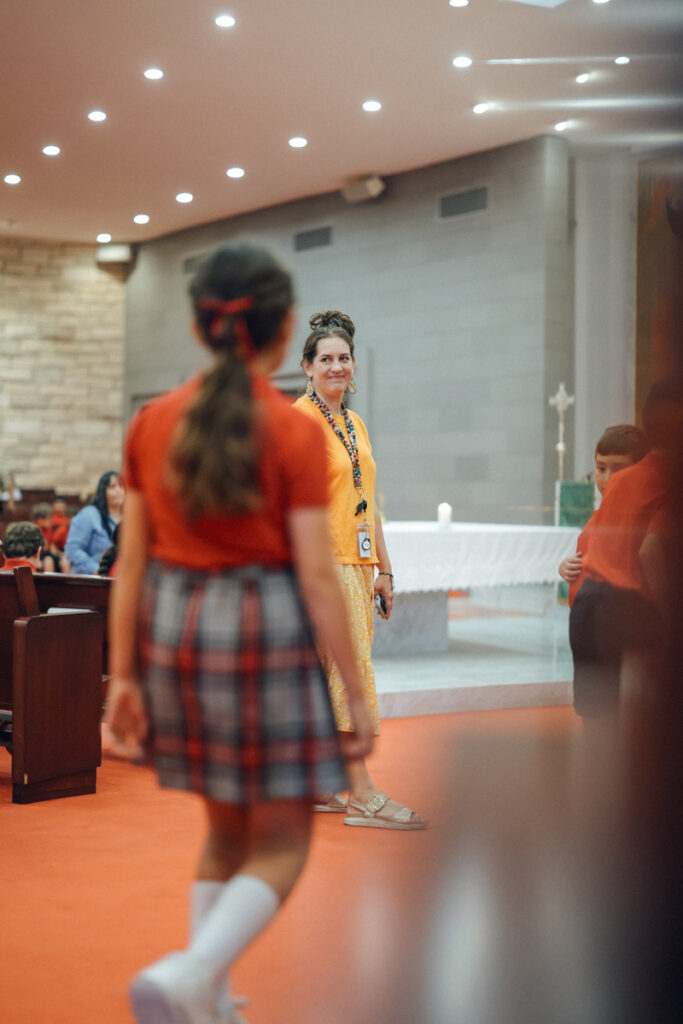
Where Graduates Go
MSMCS reports that its graduates have continued into Catholic, private, and public high schools throughout the Dallas area, including Cistercian, Jesuit, The Highlands, UME, Great Hearts, Faustina and Hockaday.
Early Alumni Evidence
Existing alumni stories offer encouraging long-term evidence of formation:
- Eva Montenegro, Class of 2017, continued to Rice University, studied mechanical engineering, and participated on an award-winning senior capstone team.
- Gabriel Greene, Class of 2010, described how daily Mass, small classrooms, the sacraments, and teacher relationships helped form his adult commitment to service.
- Maribel Rodriguez Laguna, Class of 1996, connected her vocation as a licensed professional counselor and volunteer work to early experiences of service at MSMCS.

Our Standard for Success
Success is not measured only by an acceptance letter, entrance-exam score, high-school GPA, or advanced-course placement.
Those measures matter, and MSMCS is proud of all our students, and we report these transparently.
But the fuller measure is the student who enters high school prepared to learn, think, communicate, work, choose, serve, and remain grounded in Christ.
The school seeks to develop graduates who are ready for both the next academic challenge, and also for the greater freedom and responsibility that come with it.
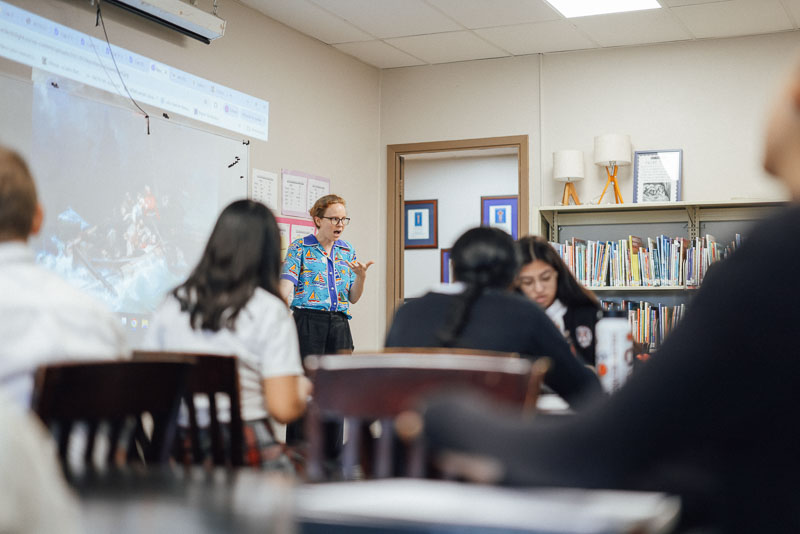
Reach Out to Us
Let’s Talk About What Your Child Needs
The best student-support conversation begins with an honest understanding of the child and an equally honest understanding of the school.
If your child needs additional support, specific accommodations, or greater academic challenge, speak with the admissions team before applying. Share the relevant information, ask direct questions, and allow the school to evaluate whether MSMCS can serve your child well.